How to Get Out of a Reading Slump (Without Forcing It)
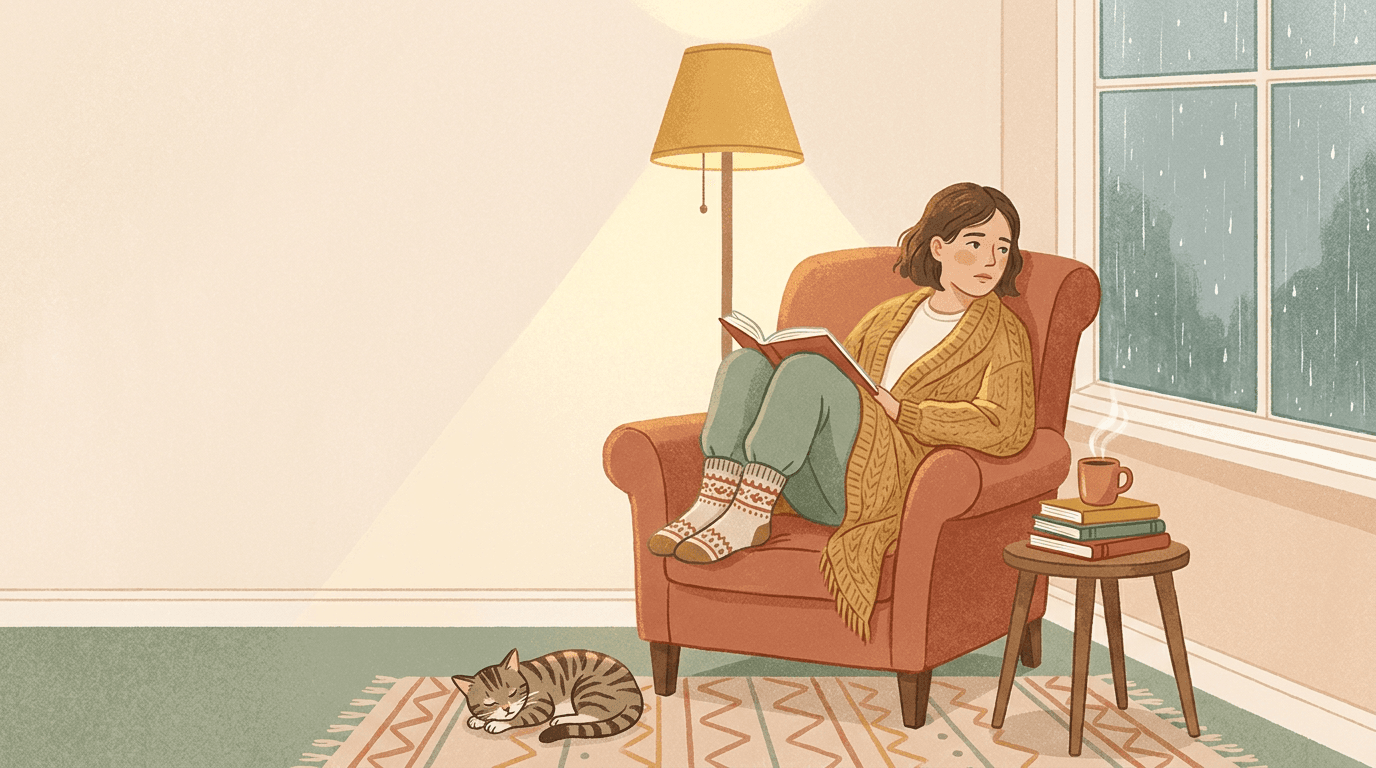
How to Get Out of a Reading Slump (Without Forcing It)
Every reader I've ever known has hit one. You finish a book you loved, reach for the next one, and… nothing. The words slide off. You read the same paragraph four times and retain none of it. The stack on your nightstand starts to feel less like a promise and more like an accusation. By week three you're wondering if you even like reading anymore.
You do. You're in a reading slump, and a slump is not a verdict on your character — it's a temporary state with a cause, and almost always a fix. I've climbed out of more of these than I can count, and the thing nobody tells you is that the way out is rarely "try harder." It's usually "figure out what's actually wrong, then stop fighting it." Let's do both.
First, stop blaming yourself
Here's the reframe that matters most: a reading slump is information, not failure. It's your brain telling you that something about how or what you're reading isn't working right now. Treating it as a discipline problem — reading less because you're lazy, just need to push through — is the surest way to make it last longer. The guilt becomes its own obstacle. You start associating books with a chore you're failing at, and that association is exactly what keeps you off the couch.
So before any tactics: let yourself off the hook. Readers don't read at a constant rate forever. The slump is normal. Now let's find its cause, because the right fix depends entirely on which kind you've got.
Diagnose your slump before you fix it
Most reading slumps are one of four kinds. Read these and see which one twinges.
The wrong-book slump. You're not in a slump — you're just stuck in a book you don't want to finish but feel obligated to. This is the most common one and the easiest to misdiagnose, because the book isn't bad, it's just not the book for you, right now. The tell: you'd rather scroll than pick it up, but the thought of a different book sounds appealing.
The life slump. You're stressed, busy, grieving, new-baby exhausted, or your brain is fried from screens all day. Reading takes a kind of sustained attention that a depleted mind genuinely can't summon. The tell: it's not just reading — focus is hard everywhere. This isn't a reading problem; it's a capacity problem, and it deserves gentleness.
The hangover slump. You just finished something so good that everything else feels grey by comparison. A book broke your heart in the best way and now nothing measures up. The tell: you keep thinking about the last book instead of wanting a new one.
The format slump. The reading itself is fine, but the conditions are off — you only read on your phone, where eleven other apps are one swipe away, or you only have energy for books at 11pm when you're already asleep on your feet. The tell: you read fine on vacation, terribly at home.
Naming yours changes the prescription. Here's what to do for each.
Give yourself permission to DNF
If you've got the wrong-book slump, the single most powerful move is the one readers resist hardest: put the book down. Did Not Finish. DNF. You're allowed.
Somewhere along the way a lot of us absorbed the idea that abandoning a book is a moral failing, like leaving a meal half-eaten. It isn't. Life is finite and the number of great books you'll never get to is staggering; spending three weeks slogging through one you're not enjoying out of stubbornness is the actual waste. I now give a book about 50 pages — sometimes 100 for a slow-burn I've been promised pays off — and if it hasn't earned the next hour, I set it free. Nine times out of ten, the slump wasn't a slump at all. It lifts the instant you start something you actually want to read.
A useful trick: keep a note of why you stopped. "Too slow," "didn't care about anyone," "wrong mood, might revisit." It saves you from rebuying your own mistakes, and sometimes "wrong mood" books become favorites a year later.
This is one place a tracker quietly earns its keep. In LitShelf you can move a book to a dedicated DNF shelf instead of letting it haunt your "currently reading" list, so setting it down feels like a clean decision rather than a loose end. Each DNF keeps its own note and your own tags — "too slow," "wrong mood," "try again in winter" — so the next time you're slump-shopping you can see at a glance what you tend to bounce off when you're tired, and which books you only paused for later. It turns quitting from a guilty secret into useful data about your own taste.
Match the book to your mood, not your ambition
The wrong-book and hangover slumps both come down to the same thing: you're reaching for what you think you should read instead of what you actually want.
Your aspirational TBR — the literary doorstops, the worthy classics, the book everyone's discussing — is a terrible place to shop when you're slumping. Ambition is the enemy here. What pulls you out is appetite. Ask yourself honestly what you're in the mood for: something fast and plotty, something funny, a comfort reread, a slim book you can finish in two sittings. Then read that, guilt-free, even if it's "below" your usual fare. A romance or a thriller you tear through in a weekend does more to end a slump than a prize-winner you abandon on page 40. Momentum beats prestige every single time.
For a book hangover specifically, lean into the grief rather than against it. Either reread a few favorite chapters of the book that wrecked you, or deliberately pick something in a completely different register — swap literary heartbreak for a propulsive mystery — so you're not asking a new book to compete with the old one on its own turf.
Shrink the book and the goal
When the slump is about capacity — the life slump — the fix is to lower the bar until it's almost embarrassingly easy to clear.
Pick the shortest thing that interests you. A novella, an essay collection you can read one piece at a time, a book of short stories, even a graphic novel or a kids' book you loved at twelve. There is no rule that says reading only counts above a certain page length. Finishing anything rekindles the feeling of being a person who finishes books, and that feeling is the whole point.
Then shrink the goal to match. Forget chapters. Tell yourself you'll read two pages. Two. That's it. The two-page promise works because the hardest part of reading in a slump is starting, and two pages is small enough to disarm the resistance. Most nights you'll read more once you've begun — but on the nights you don't, you still read two pages, and you're still in the game. Tiny and consistent beats heroic and abandoned.
A few more low-effort levers for the life slump:
- Try audio. A slump in your eyes isn't a slump in your ears. Audiobooks count, and they sneak reading into commutes, dishes, and walks when sitting still with a page is too much.
- Read at a better time. If 11pm isn't working, steal ten minutes in the morning or at lunch when your brain is actually online.
- Put the phone in another room. Half of "I can't focus on reading" is just proximity to a more rewarding dopamine machine. Remove the machine.
Rebuild the conditions, not just the willpower
The format slump is the most fixable and the most overlooked, because it feels like you're broken when really your setup is.
If you only read on your phone, get the book onto something that doesn't buzz — a cheap e-reader, or a physical copy. If you only try to read when you're already exhausted, move it earlier. If your house is loud, make a small ritual that signals "now we read": the same chair, a cup of something warm, ten minutes before the day starts. Environment does quiet, heavy lifting that willpower can't. You're not trying to become more disciplined; you're trying to make reading the path of least resistance for ten minutes.
Let your own data point the way
Here's a thing experience teaches you: most slumps end faster when you can see the pattern instead of guessing at it. If you've ever finished a string of dense literary novels and then crashed, that's not a mystery — that's a readable pattern, if you've been keeping track.
This is the quiet, practical reason I track what I read in LitShelf. The part I lean on most when I'm slumping is my Reader DNA — a profile built from every book I've finished and rated that maps the actual shape of my taste. Instead of a vague sense that I "like tense, slightly melancholy books," I can see it laid out as a radar of how my reading actually feels, mood by mood — heavy on tension and awe, light on joy and tenderness, say.
When a slump hits, that profile is the diagnosis. I can see the last stretch was all high-tension, low-joy reading, which explains the burnout and tells me exactly what's missing: reach for something warmer and lighter to balance the shape back out. The slump stops being "I can't read lately" and becomes "I've overdosed on one register — go find its opposite."
And this is where it turns from a mirror into a map. LitShelf's suggestions read both sides of the equation: your Reader DNA and the individual DNA of each book. So you can find your next read by leaning into your shape — books that fit who you already are — or deliberately pick something that fills the gap your recent reading left. You can even drag the shape toward what you want right now, or snap it to the feel of a book you loved, and the ranked list updates live.
You don't need an app to beat a slump. But having your reading life written down — the shape of your taste, the notes on what you abandoned, a to-read shelf you built in a better mood — turns "I just can't read lately" into "ah, that's why, and here's the obvious next book." That shift, from vague guilt to a clear next step, is usually the whole fix.
The short version
A reading slump isn't a character flaw, it's a signal. Figure out which kind you've got — wrong book, drained life, book hangover, or bad setup — and the fix follows: put down the book you're forcing, read for appetite instead of ambition, shrink the book and the goal until starting is easy, fix your reading conditions, and lean on your own history to pick the right next read.
Mostly, be patient with yourself. The reading didn't go anywhere. It's waiting for you to stop forcing it and offer it something you actually want. Pick the shortest, most tempting thing within reach, read two pages tonight, and let momentum do the rest.
Want to spot your own slumps before they take hold — and always have the right next book waiting? That's what we built LitShelf for.
More from the blog
Reading Journal Ideas: What to Track (Paper or Digital)
Reading journal ideas: what to actually track, the honest case for paper vs. digital, and how to keep a reading journal you won't abandon by March
Reading Challenge Ideas: 12 Ways to Read More
Reading challenge ideas that add variety, not pressure — 12 formats (prompts, themes, genre-stretch, backlist) and how to pick one you'll actually finish.